
The trend in corporate earnings suggests that index earnings could fall to the levels last seen in early 2014.

Though Google's investment is minuscule and will not move the needle, it will attract other investors to the company and be a morale booster. Pursuing Vodafone Idea would potentially pit Google against Facebook and an increasingly dominant Jio.

The dispute between RCom and Chinese banks led by ICBC started after Anil Ambani led company defaulted on its loans to Indian as well as Chinese banks. A British court on May 22 asked Ambani to pay nearly $717 million to three Chinese banks within 21 days.

Urban planners and real estate experts say bad town planning in Mumbai and rising deaths during the ongoing pandemic are a "sad reality". Dev Chatterjee and Raghavendra Kamath report.
India's biggest firm, Reliance Industries, has decided to cut salaries by 10 per cent in its oil and refining divisions. Several smaller companies like Kajaria Ceramics have followed suit with cuts as high as 40 per cent for those earning more than Rs 50 lakh.
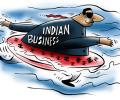
Combined profit before tax of 81 firms down 37.5% y-o-y, worst show in at least 3 years.

RIL, however, remains miles ahead of TCS in other financial parameters such as total revenue, operating profit, net worth, assets, and market capitalisation.

The one-time restructuring of loans will help every firm and prevent cost-cutting measures such as lay-offs.

Corporate revenues will decline for a third consecutive quarter in March on a YoY basis - one of the worst shows by these companies in many years.

Indians face COVID-19 with record debt, stalled income.

RBI is expecting the rupee to stay close to Rs 75 to a dollar, as COVID-19 forces foreign funds to withdraw from emerging markets.
Profitability and cash reserves have halved since the global financial crisis.

Though Kishore Biyani is selling stakes in group companies to pay off debt, a significant share price crash since January this year is making his task difficult.

Many firms have asked those joining on April 1 to delay their on-boarding by 2-3 months. The outlook for the airline, tourism, hotel, and media industries is bleak too.

The combined market capitalisation of the top 873 family-owned companies was down 26.3 per cent year-on-year (YoY) to Rs 61.8 trillion at the end of trading on Tuesday. It had grown 6 per cent in FY19 and nearly 20 per cent in FY18.
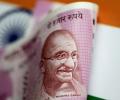
Some of the top indebted companies likely to face financial headwinds in the coming quarters include NTPC, PowerGrid, Tata Steel, Adani Power, JSW Steel, UPL, and Steel Authority of India. Together these 201 companies owed Rs 14.9 trillion to their lenders at the end of September 30, 2019, up 4.1 per cent year-on-year (YoY) during the first half of FY20.

In the manufacturing sector, output is expected to decline by about 70 per cent as only food-processing, and drugs and pharma industries are allowed to operate while other segments, such as engineering and metals, have shut operations.

Indian companies will have to repay overseas debt worth $7.5 billion in the June quarter.

To sell off L&T IDPL, Nabha Power; transfer Hyderabad Metro to an InvIT.

Apart from the Adani group, the Tata group, the Hinduja group, Indigo and a New York-based fund, Interups, are expected to submit EoIs.
